Que decepção essa escrita do Sandisk Extreme CFx 128GB 
Mais caro e mais lento
Obrigado Sena.
The Nikon Z9’s new sensor could be the start of a big shift in photography
A shutterless camera might open new doors first reserved for smartphones

Eu assisti a Live do Seth, Matt e Ricci ontem. Muita informação.

Nikon Z9 Autofocus, Buffer Tests, High Speed Sync Flash and More!
Taylor Jackson
0:00 Nikon Z9 Review
0:49 High Speed Sync For Flash
1:47 Nikon Z9 Autofocus
3:05 Is the Nikon Z9 Too Big For Wedding Photography?
4:08 Sensor Protection
4:48 High Frame Rate Buffer Tests in All Raw Modes
6:53 Nikon Z9 for Hybrid Photo Video Coverage
8:23 Electronic Shutter with Artificial Lighting Conditions
9:24 Low Light Autofocus
9:40 Low Light High ISO Sample Images
9:55 IBIS Test
10:59 Monitor to EVF Switch Time
11:06 How Fast The Camera Turns On
11:15 Nikon Z9 Review Conclusions
Eu ia postar agora esse.
Hss funciona perfeitamente.
Fastest CF Express B & XQD Cards - TESTED
Matt Granger
Vale a pena conferir p/ quem for investir em CFExpress Tipo B.

Sobre os arquivos RAW (NEF) da Z9: 14 bit:
- lossless (compressão sem perdas)
- compressão high-efficiency*
- compressão high-efficiency
Não existe a opção de RAW 12 bits.
High-Efficiency RAW. 1/3 smaller. New RAW format retains the same high image quality, dynamic range and flexibility as conventional RAW files with approximately 1/3 smaller file size. Speed up your workflow.
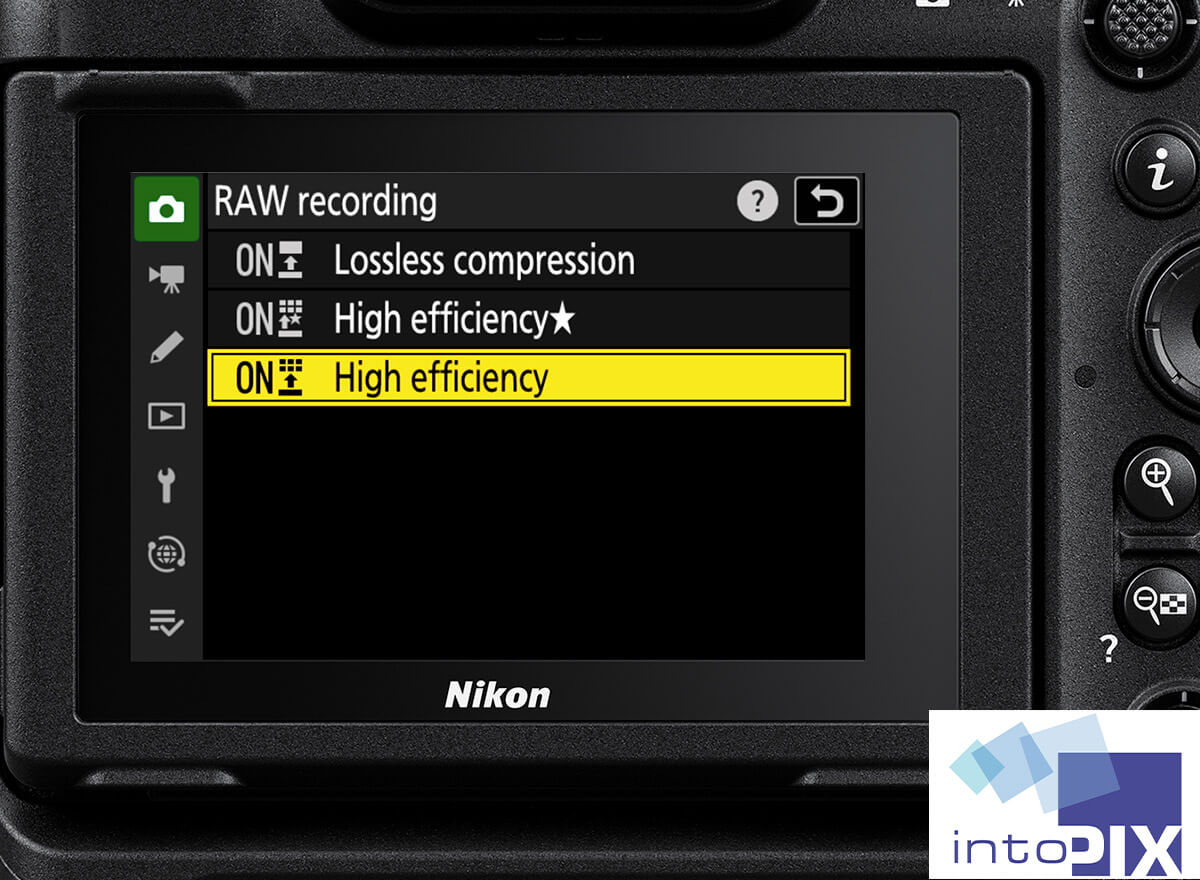
fonte:
Notem a logo da IntoPIX na imagem.
Thom Hogam já fez uma ressalva com relação a isso:
What does RAW (High Efficiency) mean? Is this another name for Compressed NEF, or is there a new compression scheme in play? [b](Early indicators is that it's a new compression scheme, which might be licensed TICO-raw. [/b]New
I’m starting to wonder, though, about the use of the words “high efficiency.” The implication is that this might be another HEIF—no, not HEIC, which is a form of HEIF—format, which means it’s a standardized wrapper file, much like TIFF-EP is to NEF. HEIF stands for High Efficiency Image File Format. But we still don’t know the form of the data inside and how that is producing smaller files.)
fonte:
https://www.zsystemuser.com/z-mount-cameras/z-camera-articles/the-unanswered-z9-questions.html
Segundo Hogam, temos 2 possibilidades:
- Os novos formatos são licenciados pela IntoPIX e são TICO RAW
- São algum tipo de formato
HEIF
(
H
igh
E
fficiency I
mage
F
ile)
Informações sobre o TICO RAW:
TICO RAW is the new RAW Gain in Efficiency, improve your imaging workflows
- Reduce bandwidth and power consumption to process more pixels from the sensor.
- Handle higher resolution, high frame rate and high dynamic range easily : to capture to record, to transmit, to edit, to analyze.
- Reduce the bandwidth of memory during the ISP process and RAW data analysis.
- Get the lowest latency (“pixel-line”) to transmit RAW data over your wired / wireless network, infrastructures, interfaces.
- Efficiently decrease the stored RAW image data on the storage media (TICO-RAW is the new RAW at the size of a regular JPEG file).
- Increase the editing, rendering, analytics speed and while retaining the sensor data needed for a complete control of the RAW processing pipeline.
Bom, mas isso acima pode ser considerado bla bla bla de marketing.
Vamos a alguns detalhes técnicos:
Imagem/video
Color format
- CFA (color-filter-array):RAW data , Bayer data (RGGB, RCCB, …) (optional monochrome and 4:2:2 mode)
- Bit depth: 8 / 10 / 12 / 16 bits sensors
- Resolution: Any up to 200 Mpixels ( 50.000x40.000 pixels)
-Frame rates: Any (depending on ASIC / FPGA or CPU/GPU processor configuration)
Processamento
-Quality: Mathematically lossless / Near-lossless / visually lossless / lossy down to 1 bit per pixel (bpp)
- Rate control: Constant Bit Rate (CBR) operation (or Constant Quality mode), adjustable from ~2:1 down to 20:1 (0,5bpp)
- Latency: (Sub-) intra-frame: down to 0.1 millisecond
- Proxy option: Downscaler in decoder for fast analysis, raw proxy viewing and editing
Com as informações acima é possível especular que (minha opinião):
- High Efficiency+ seja Near-lossless
- High Efficiency seja visually lossless ou lossy
Tamanho dos arquivos:
55MB Lossless raw
33MB High Efficiency Raw Star
22MB High Efficiency Raw
24MB JPEG Large Fine.
E porque isso tudo acima é importante?
Já temos uma discussão gigantesca pela internet sobre a capacidade do buffer da Z9. Aqui mesmo nesse tópico já tem alguns vídeos mostrando um pouco dessa questão. Além disso o desempenho é diferente entre marcas e modelos de cartão CFexpress tipo B.
De acordo com a documentação da Nikon temos:
Keep your finger down. 1,000-image buffer capacity. With a seemingly bottomless buffer, the Z 9 shoots continuously for more than 1,000 frames at 20 fps* as [b]full resolution High-Efficiency RAW or JPEG (L) fine[/b] files.*When using the recommended memory card: ProGrade Digital CFexpress™ Type B 2.0 Cobalt 1700R.
fonte:
O primeiro teste que o Matt Grande fez, veja aqui:
Ele conseguiu 1899 fotos usando o formato High Efficiency. Com o High Efficiency* foram 550 no buffer.
Depois ele fez um outro testes, mais completo, envolvendo os 3 formatos e diferentes cartões. Veja aqui:
Mas o melhor teste, na minha opinião, foi o do Ricci. Veja aqui:
teste com 20 FPS, notem a diferença nos resultados.
Com o cartão CFexpress Delkin Black 1440 MB/s
loss-less: 81
High+: 1100+
High: 3000+
Lexar 1000 MB/s
loss-less: 61
High+: 182
High: 1000+
Bom, coloco mais informações a medida que for entendo melhor a situação.
Gostei muito.
2x
Sem dúvida o teste do Ricci foi mais completo e bem detalhado.
Interessante esse trecho do link que você postou do Thom Hogan:
“dois dos revendedores com quem conversei sentiram (provavelmente corretamente) que não seriam capazes de preencher seus lista de espera de cinco minutos na primeira remessa que receberiam da NikonUSA. Não vou entrar em números específicos, mas todas as maneiras que posso monitorar as encomendas dizem que o Z9 acumulou o maior volume de unidades de encomenda para um anúncio de câmera Nikon até agora”
Finalmente um vídeo que compara os leitores de cartão CFexpress tipo B:
Torcendo p/ a Nikon conseguir estabilizar sua produção o mais rápido possível p/ realizar as entregas.
E, torcendo também, para que com o sucesso da Z9 passem a pensar em adiantar o lançamento da Z 6III e Z 7III.
:assobi: :assobi:
- compressão high-efficiency*
- compressão high-efficiency
engenheiros não podem dar nome as coisas :hysterical:
ficou bem confuso esses nomes assim.
poderiam adotar a nomenclatura da Apple
High Efficiency PRO MAX
High Efficiency PRO
:hysterical: :hysterical: :hysterical: :hysterical:
Esse sistema de foco + o botão lateral para seleção de focagem em Z6 e Z7 mark III será fantástico.